Consultant for College Admissions
Hello & Welcome
I work with you to develop a sense of intellectual self-awareness, to find out what you like, and what you will be good at, while you are in college. Then I work with you to find a voice for yourself.
There are no secrets to getting in, but there is an art. You have to learn how to write about yourself. This is hard for even the best writers to do. It comes out of hard-won self-knowledge.
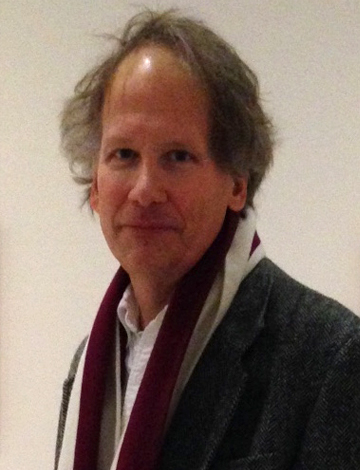
I am a former Harvard professor. I work with students on the model of the Harvard tutorial, often introducing them to texts and techniques not taught in high school. Through this, they start to hear new possibilities for their own voices. They start to see how to see themselves in a new way, using close observation and a personal style of reflection that invests ideas with feeling, and feeling with ideas. In other words, they find distinctive voices for themselves, becoming intellectually introspective.
The process is both tremendously exhilarating and very successful. Most of the students who work with me over the long term get into an Ivy League school, or one just as good.
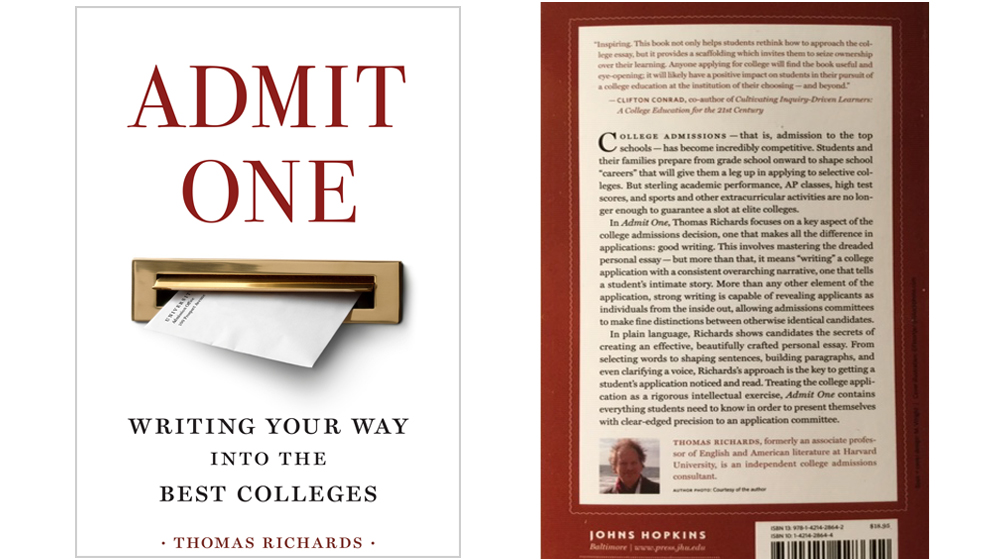
I received my Ph.D. in English Literature from Stanford University. I taught at Harvard University for eight years, promoted to the rank of Associate Professor of English and American Literature and Language. While there, I served on various admissions committees and helped administer Harvard's tutorial program in English. I have written four books in the field of literature: three works of literary and cultural criticism, and one novel. I also write on higher education. My book, Admit One: Writing Your Way into the Best Colleges, has recently been published by the Johns Hopkins University Press.
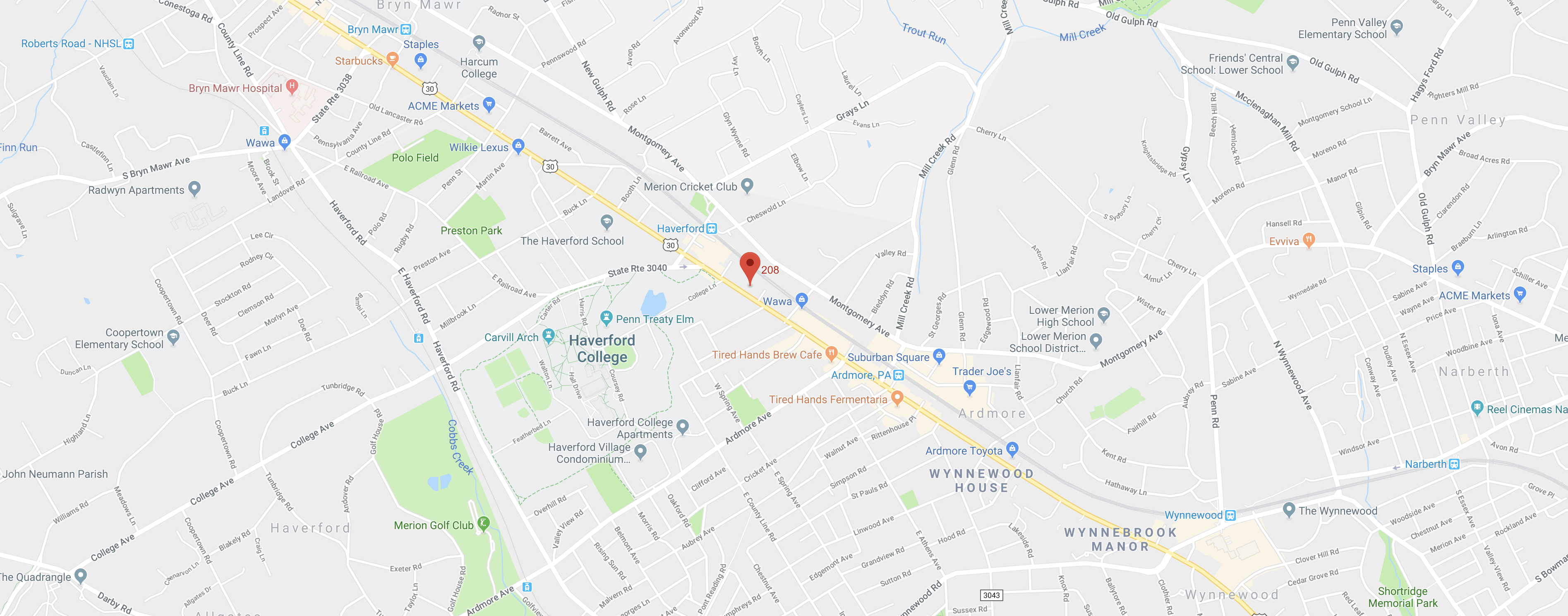
I have an office for College Admissions Consulting on Philadelphia's Main Line. I specialize in helping students find admission into one of the Ivy League schools, Stanford, the University of Chicago, Johns Hopkins, Duke, plus the most highly-regarded of the liberal arts colleges and state schools. I have been doing this for over ten years. I also help place my students in a variety of programs around the world that accord exactly with their interests. I work with students in the humanities, of course, but also the social sciences, and the sciences.
My book, Admit One: Writing Your Way into the Best Colleges, came out in 2019. It lays out my writerly approach to college admissions in some detail, and can be purchased at Amazon and Johns Hopkins, as well as at most major bookstores. It is available in paperback for $18.95.
How do you work with someone over time?
I first teach my students how to write with care and craft. Only through their writing can students move toward thinking their own thoughts, becoming, intellectually, as deeply themselves as they can.
Why writing?
Academic culture is a culture of words. Americans often have a great casualness about language, a sloppiness of expression. The great universities and colleges do not. The degree of precision, accuracy, and elegance commensurate with these schools is rarely broached at high school.
Do your students use models for their essays?
Only in the most general sense. They may read Elizabeth Bishop's essays, or Guy Davenport's, or Richard Rodriguez's. Virginia Woolf's Diary or John Cheever's Journals. But what they take away is their own. Reading these writers goes toward developing a trust of what is going on in your own mind, and building a confidence that you can represent it in your own way.
Why this emphasis on the essay? Don't grades and scores matter?
High grades and scores certainly are one indicator of intelligence. But even more, they are an indicator of the willingness of a student to please teachers. The great universities see themselves as places for disturbing the universe. They are looking for people whose locus of evaluation exists primarily within themselves, people who not not necessarily look to others for approval or disapproval. A good application should give you a feeling of looking in on a very interesting life, a self-chosen life undertaken for its own sake.
How long does it take?
It varies. Some students I start working with in the tenth or eleventh grade. The emphasis there is in finding an academic direction and beginning to follow it. I also work with twelfth-graders who are well along in this process but still need to find the right degree of emphasis in presenting themselves.
What about the usual range of high school activities?
The answer is in the word “usual.” The usual activities are dependent rather than independent undertakings. Gradually, of course, one can begin to distinguish oneself within them, but as such they often offer little discretion for students to find their own way outside of preconceived channels and categories.
Students today are so overworked. Doesn't this increase their load?
Anyone with good powers of concentration knows that those powers, though extensive, are limited. Nobody can stay at full focus all the time. I encourage my students to work effectively, which includes knowing when they work best, just how much they can take on, and when to stop working. I think it's just fine for students to work harder for some courses than for others. A perfect record is in some ways a red flag to admissions committees, a sign that a student is so focused on pleasing adults that he or she lacks a sense of inner direction. Who among us can really be good at everything?
Aren't you asking rather too much of 17- or 18-year olds?
The schools themselves are looking for an incipient intellectual maturity, an open awareness of ideas and their shaping power. They are also looking for students whose beliefs are not rigid, who have a high tolerance for ambiguity. And they are seeking students who have an openness to specifically intellectual experience. In this sense simply telling your own story in an application essay is not enough. There has to be an intellectual tilt to what you are saying about yourself, and that is where I come in. It takes a lot of work—a lot of reading and a lot of writing—to know what you are thinking about things, to see where your thoughts come from, and to experience your own thoughts as uniquely yours. Part of Harvard's success resides in the personal emphasis of its tutorial system in teaching students how to think and write. I try to bring this to every student I work with.
A schedule of fees is available upon request. Cash, check, all major credit cards, and Paypal accepted for payment.
If you do not show up for your scheduled appointment, and you have not given notification at least 24 hours in advance, you will be required to pay the full cost of the session.
I am committed to your privacy. I do not give out the names of my students, and I never use past students as references.
I can meet with students via Skype or FaceTime. Payment then is by credit card or Paypal.
I take on international students of high promise who meet Ivy League standards of English.
Questions? Please contact me for further information. You can call my office, email me directly or use the form below.
I've included several ways to contact me. Please give me a call, send an email, or simply fill out the form on this page. I'm looking forward to speaking with you. I am committed to your privacy. Do not include confidential or private information in this form. This form is for general questions or messages.